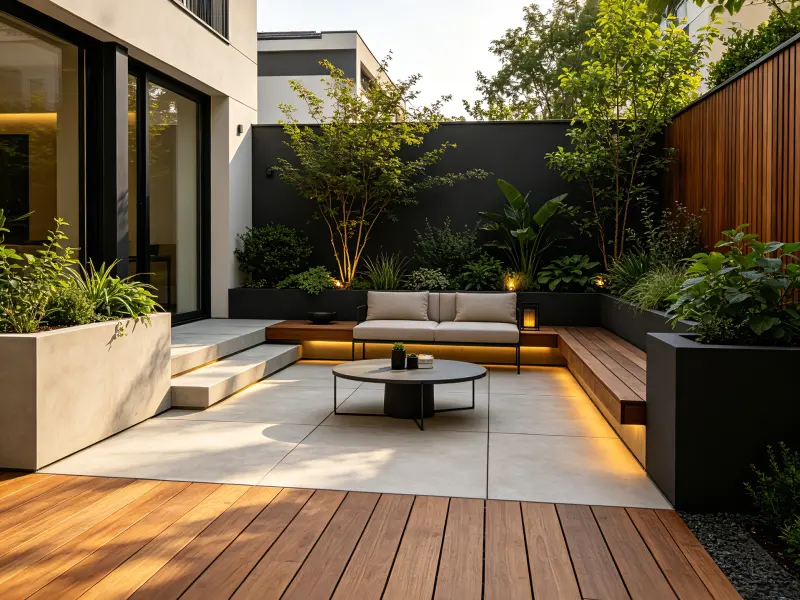
Small Backyard Ideas for a Beautiful Outdoor Space
Transform a tiny yard with these small backyard ideas for privacy, smart layouts, low-maintenance landscaping, stylish spaces, and free AI designs.

Amelia Clarke
Horticulturist
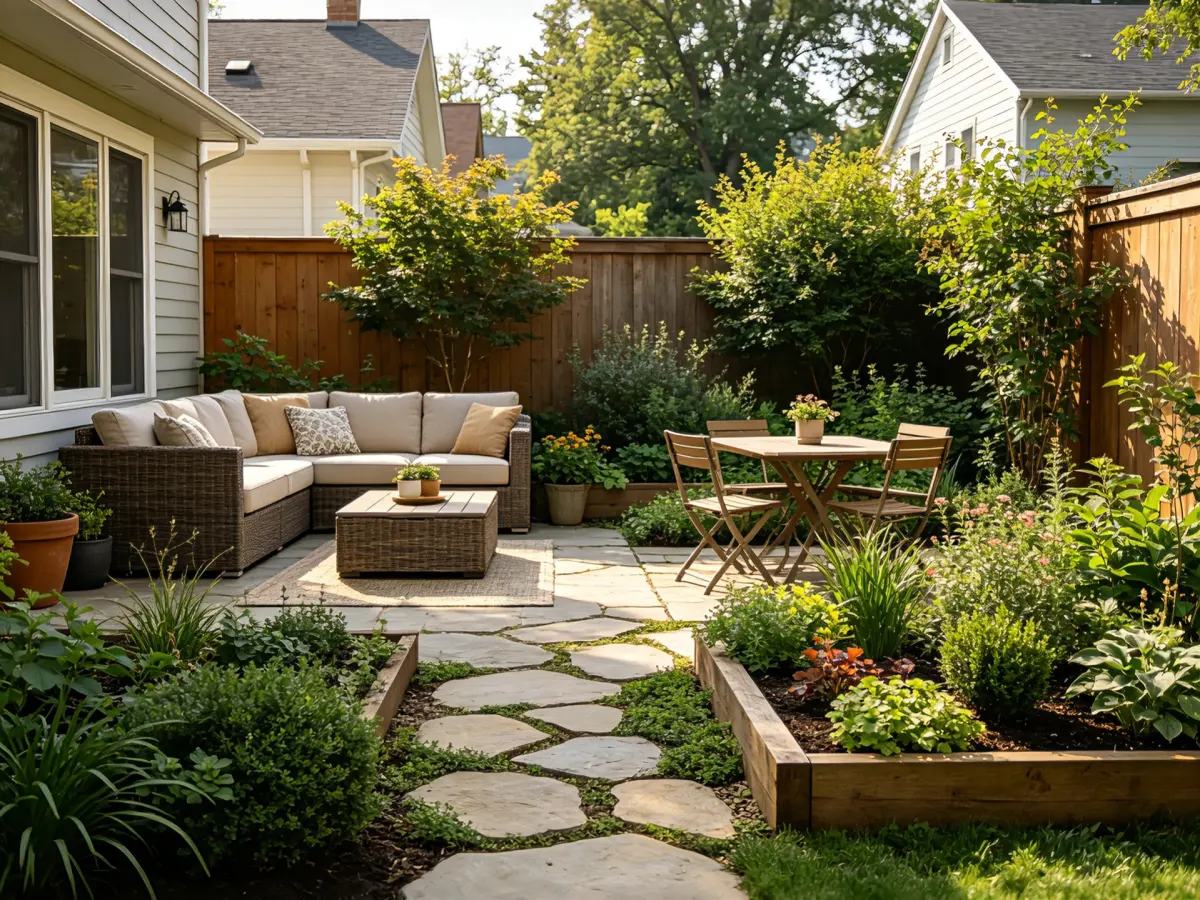
How to Design a Small Backyard That Feels Bigger Than It Is
A small backyard is often the most underused room of a home. It can become a place to eat, grow, rest, and gather, even when every square foot must work hard. The strongest small backyard ideas begin with a simple rule: function first, ambiance second. Decide how the space needs to serve daily life before choosing plants, furniture, or a dramatic feature.
Many homeowners start by buying plants they love, then try to fit a layout around them. That approach usually creates clutter instead of calm. Better backyard landscaping ideas start with circulation, sunlight, and a clear purpose. Once the structure is right, atmosphere becomes much easier to create.
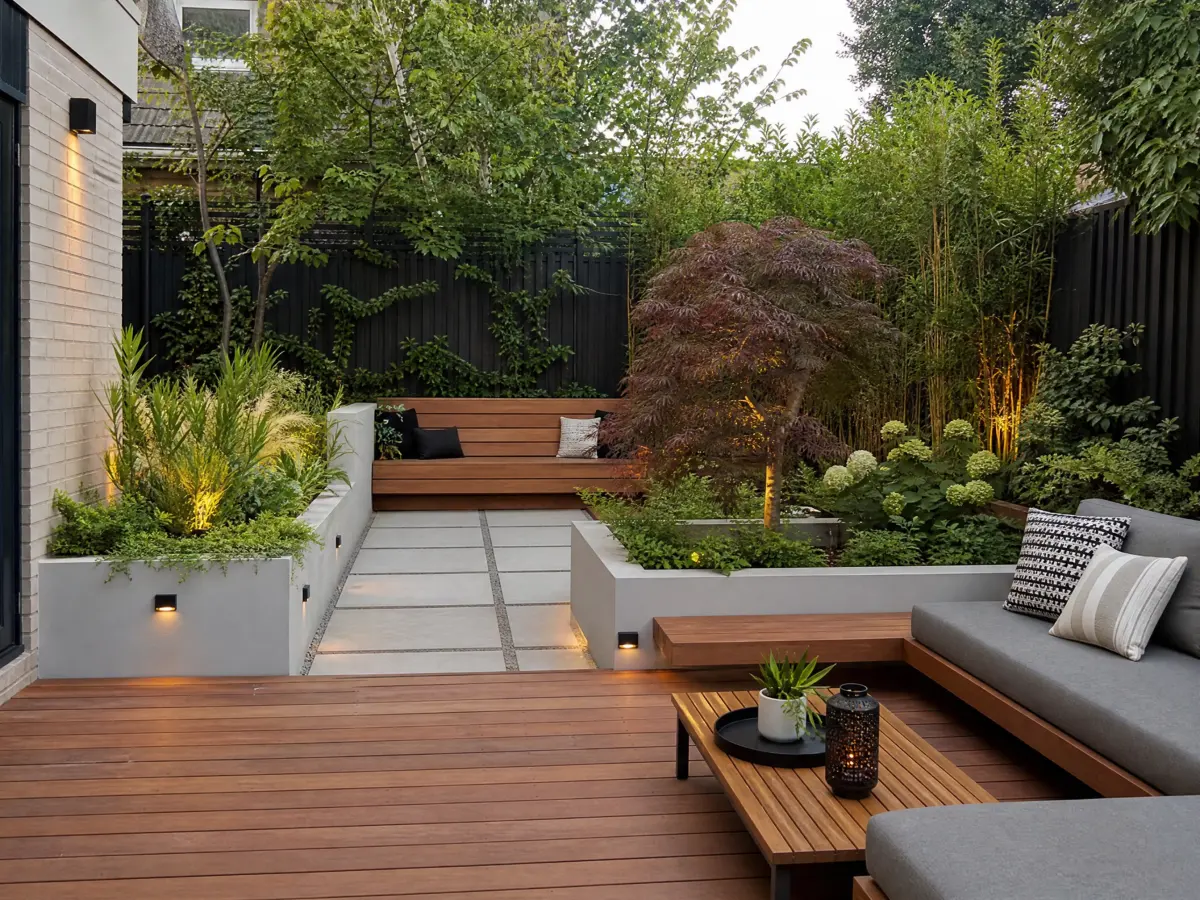
Start With the Space You Have, Not the Features You Want
Sunlight, Drainage, and Privacy First
Before collecting features, read the site. Track sun at morning, midday, and late afternoon; watch where water settles after rain; and note views from windows and neighboring properties. These conditions determine whether a dining patio, a vegetable bed, or a lounge area will succeed. Practical small backyard ideas respect the existing microclimate instead of fighting it.
Read Your Site Before You Buy Anything
Sketch fixed elements first: doors, utilities, mature trees, slopes, drains, and access routes. A planting bed that blocks a gate or a sofa placed in the hottest afternoon sun will never feel intentional. This quick audit turns backyard landscaping ideas into decisions that fit the real yard.
Ask These Questions Before You Design
Six Questions to Diagnose Your Yard
Ask six questions before drawing a plan: Who will use the yard most? What activities matter every week? Where is the best sun and shade? Which view should be framed or screened? What must be stored? How much maintenance is realistic? The answers reveal priorities and prevent a small space from trying to do everything at once.
Build the Layout Before the Plant List
Then build the layout before the plant list. Assign room for movement, seating, growing, and storage, and connect them with a clear path. This is one of the most useful small yard design ideas because plants can be changed later, while a poorly placed patio or path is expensive to correct. Good small backyard ideas are structured choices, not a collection of purchases.
The Best Small Backyard Layouts
Four layouts consistently make compact spaces work harder.
Patio With Layered Perimeter Beds
Place a patio against the house and wrap it with layered perimeter beds; it keeps the center open while adding depth.
Central Axis With Destination Planting
Use a central axis that ends at a specimen tree, sculpture, or water bowl to lengthen the view.
Side-to-Side Garden Rooms
Create side-to-side garden rooms with a lounge on one side and planting or dining on the other.
Productive Decorative Mix
Combine ornamentals with edible plants for a productive decorative mix.
Choose the template that matches your routine, not a trend photo. For example, a family that eats outside needs a generous, direct route from the kitchen, while a keen grower may prefer raised beds along the brightest edge. These backyards feel generous when each zone has one clear job.
Use Layered Planting and Choose Plants for Scale
Use four planting layers to create depth without crowding the ground: a small multi-stem tree or trained climber for height, structural evergreens for a reliable backbone, seasonal perennials for color and movement, and groundcovers, mulch, or gravel to finish the soil line.
Select plants by their mature height and width, not by the size of the nursery pot. Oversized shrubs quickly consume paths and light, while appropriately scaled plants keep the design legible. Repeat a few foliage shapes, limit the color palette, and use one focal point, such as a small ornamental tree, sculptural pot, or striking bench. A compact plant palette is usually more powerful than a crowded collection of one-off varieties.
Privacy Without Making the Yard Feel Closed In
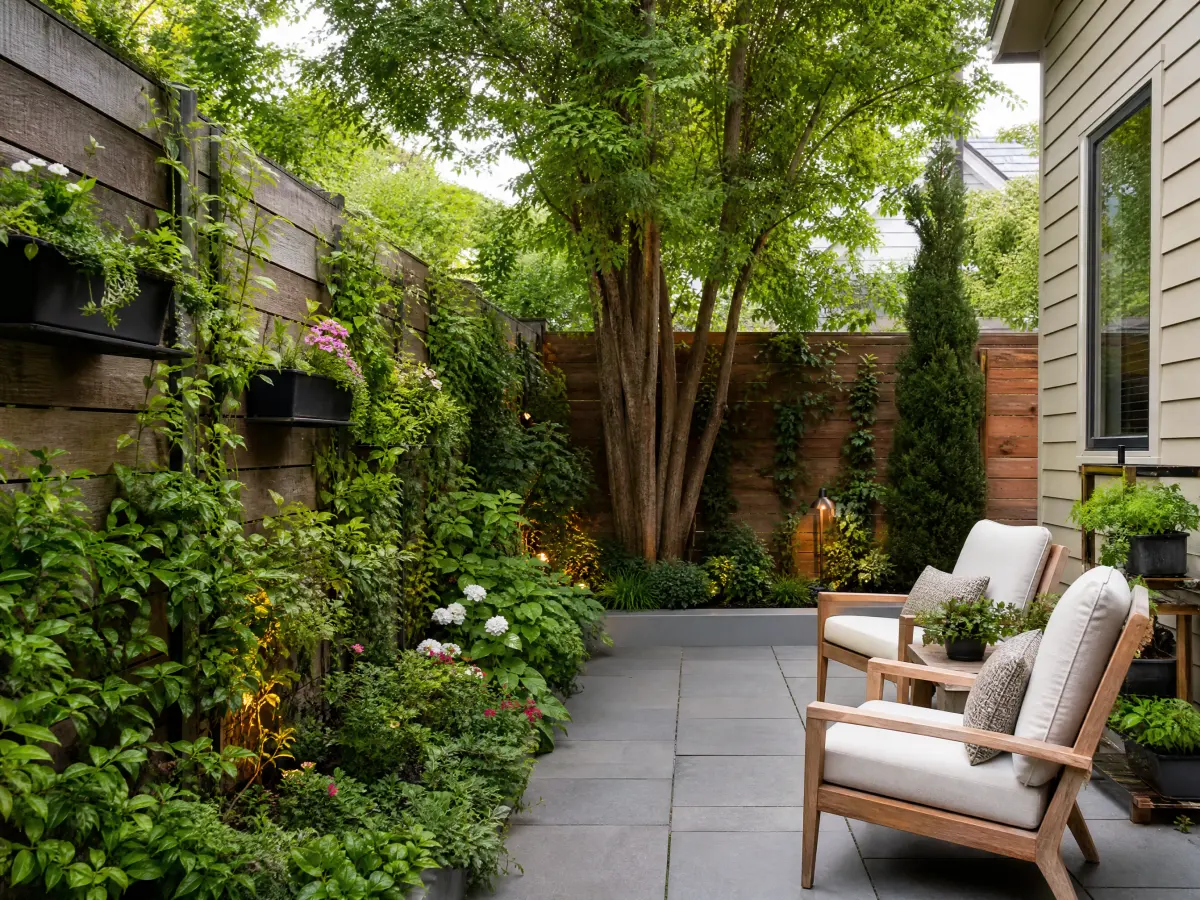
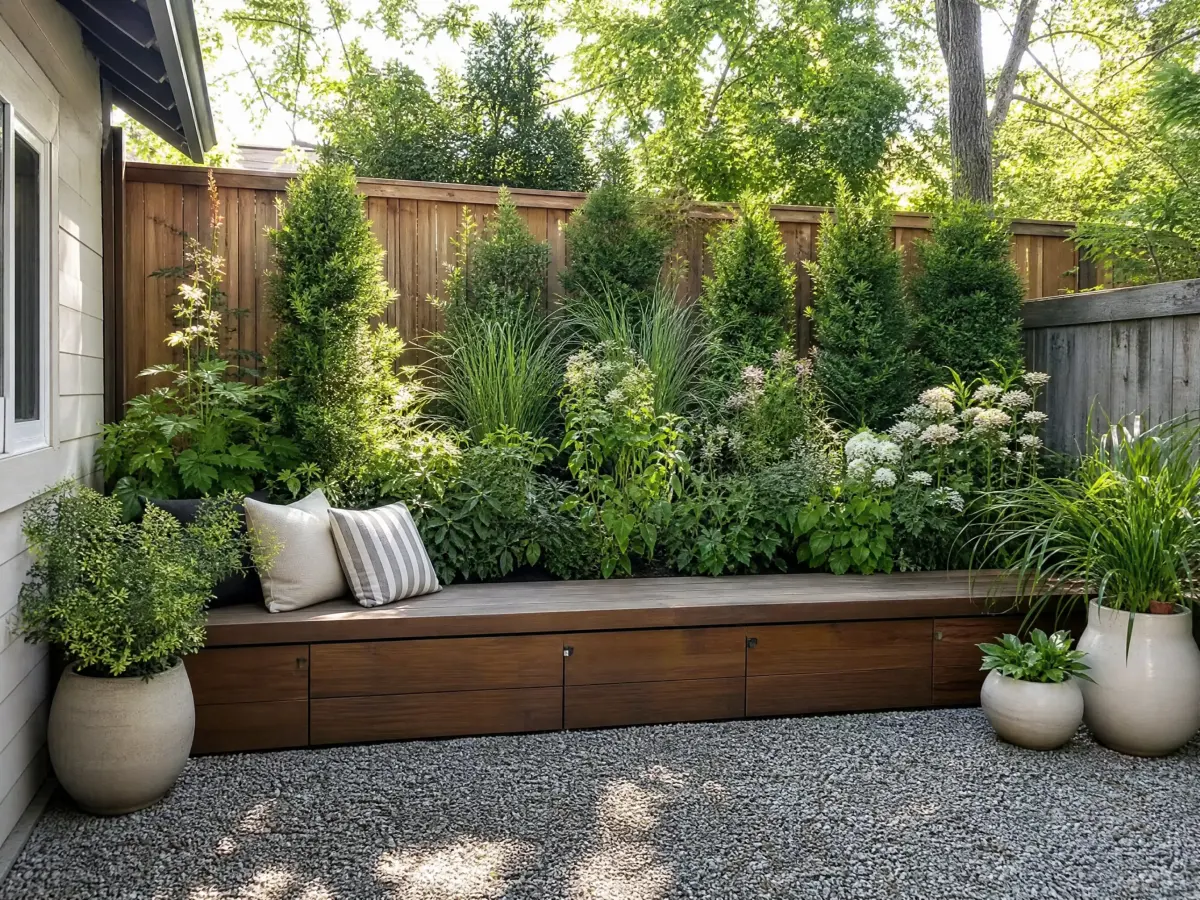
Privacy should filter views, not turn a small yard into a box. Layer a low shrub, airy ornamental grass, and a taller tree or climber to screen at several heights. A trellis with vines is especially effective because it blocks direct sightlines while admitting light and breezes.
In most compact spaces, a solid fence works best as a background rather than the whole solution. Soften it with planting, open lattice, or a narrow raised bed. Among small backyard landscape ideas, this layered strategy creates privacy and depth at the same time.
Make a Small Backyard Feel Bigger
To make a compact yard feel larger, guide the eye beyond the nearest edge. Run paving diagonally or on a long line toward a destination feature. Keep material and color choices cohesive so the surface reads as one continuous plane. Vertical planting, wall planters, and climbers borrow height while preserving valuable floor area.
Leave some open space on purpose. Clear ground around a seating area is not wasted space; it gives every other feature room to breathe. The best small backyard ideas use visual restraint to create a stronger sense of scale.
Small Backyard Ideas That Actually Work
Here are seven small backyard ideas that deliver more value than their footprint suggests:
Built-in Bench With Planting
Combine seating, storage, and a green backdrop in one edge detail.
Narrow Layered Border
Keep the center open for daily use, then layer low plants, mid-height perennials, and one vertical element along the boundary.
Herbs And Flowers
Mix fragrant edibles with pollinator-friendly blooms near the kitchen.
Vertical Climbers
Cover a trellis, fence, or arch instead of sacrificing ground space.
Small Ornamental Tree
Use one well-placed canopy as a visual anchor.
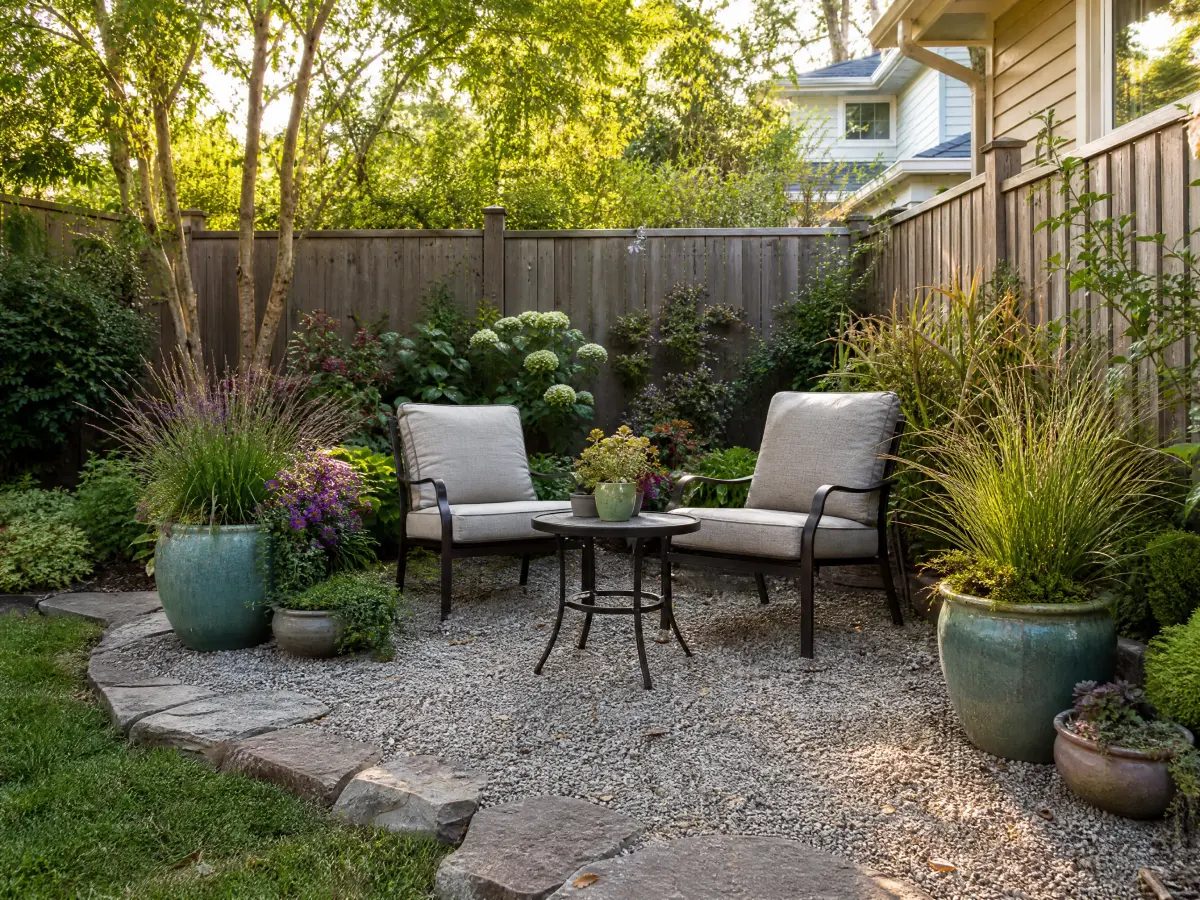
Gravel Seating With Large Pots
Use a defined gravel area with edging and large containers for a flexible, lower-cost patio alternative.
Pollinator Border
Repeat nectar-rich plants suited to your local climate to add movement, color, and wildlife without creating a high-maintenance bed.
Keep the list short enough to preserve circulation. The most successful small backyard ideas combine two or three compatible moves rather than squeezing in all seven.
Visualize Small Backyard Ideas Before You Build
A visual concept can help you compare small backyard ideas before you commit time, labor, or budget. Upload a photo of your current yard to Landscape Design AI, choose a style, and explore visual directions for seating, planting, materials, and privacy.
Compare a few concepts side by side and use the strongest option to discuss priorities with your family or contractor. Landscape Design AI is useful for exploring style and communicating ideas, but final dimensions, drainage, planting suitability, and construction details should always be checked on site.
Hardscape, Low-Maintenance, and Common Mistakes to Avoid
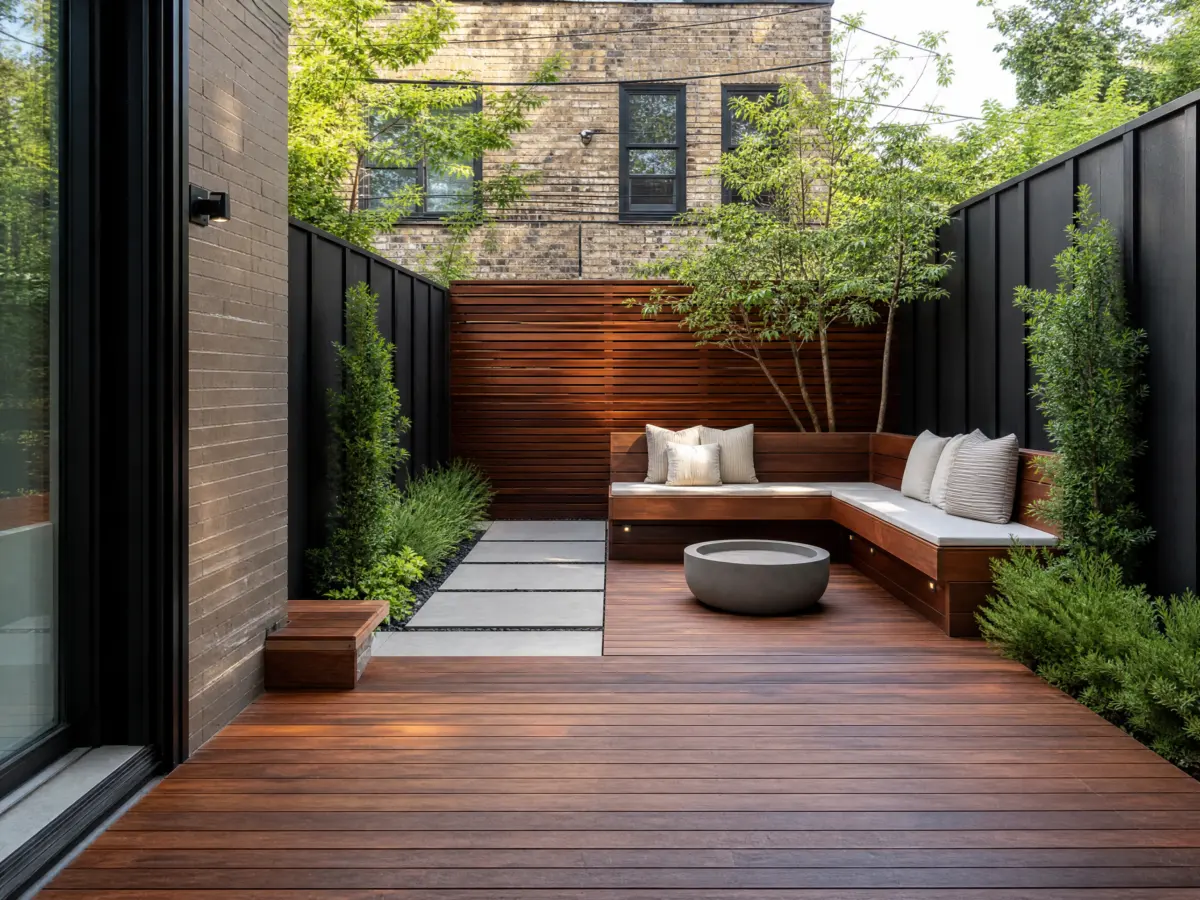
Set hardscape first: define paths, patio dimensions, edging, drainage, and utility access before filling beds. Then choose low-maintenance planting with a dependable evergreen structure, resilient perennials, mulch, and efficient irrigation. Low maintenance does not mean lifeless; it means every element has a reason to be there.
Avoid five common mistakes: overfilling the yard, ignoring mature plant size, scattering too many materials, forgetting storage, and planting before defining circulation. A simple adaptable plan uses three zones: a social zone near the house, a planted buffer around the edges, and an unobtrusive storage route. This framework keeps small yard ideas practical long after the first season.
Frequently Asked Questions
Which changes give the quickest improvement?
Start with a clear seating area, one destination feature, and layered perimeter planting. These small backyard ideas improve both everyday use and visual depth without requiring a complete rebuild.
What is the best layout for a small backyard?
A patio near the house, planting around the perimeter, and one focal point at the far end is a reliable layout. It protects open space and creates depth.
What is the cheapest way to landscape a small backyard?
Start with a clear seating area, simple edging, mulch or gravel, and a limited plant palette. Improve the space in stages instead of buying many materials or plants at once.
What should I plant in a small backyard?
Choose compact plants suited to your climate, including one small tree, evergreen structure, seasonal flowers, and groundcover. Always plan for mature size.
How can I add privacy without blocking light?
Use trellises, vines, airy trees, and layered planting rather than one tall solid barrier.
Can a small backyard include both seating and a garden?
Yes. Use perimeter beds, vertical growing, built-in seating, and containers so the center remains flexible.
Conclusion
The goal is not to make a small yard imitate a large one. It is to make every view, route, and planting layer feel deliberate. Begin with the conditions you have, choose one clear layout, plant for mature scale, and leave room to enjoy the result. With that discipline, small backyard ideas can create a landscape that feels welcoming, useful, and far larger than its dimensions.
Design a Small Backyard That Feels Bigger
Turn your small backyard ideas into realistic designs with Landscape Design AI. Visualize layouts, planting styles, privacy solutions, and outdoor spaces before you spend time or money on construction.